Top 10 lists are all the rage, especially as we begin a new decade.* And as someone who loves to rank things, I couldn’t not participate.
*I know the decade technically ends next year (2011-2020), but… come on.
I love making lists. In fact, it’s been a real bugger trying to come up with ideas for this blog that aren’t lists. So I can’t pass up this opportunity to just let my thoughts fly. Besides, this is the best way for me to succinctly express my thoughts about a number of really solid movies without having to making a butt-ton of different posts.
A quick note about top 10 lists. A lot of people like to think they have the definitive opinion about what the ten best movies of the year are. The operative word being “opinion.”
I’m gonna word this very precisely. Because art is subjective, and because my tastes are unique to only me, I’m not going to call this the Top 10 films of 2019. I don’t have any misconceptions that my opinions are more “correct” than anyone’s. (Then they wouldn’t be opinions.) These are my ten favorite films of the year. This is just my two cents. I don’t claim to know more than anyone when it comes to good filmmaking. Heck, I’m still learning about filmmaking in general.
I welcome you to (respectfully) disagree with this list. As I said, these are just my opinions based off my own unique tastes. I’d love to hear what your ten favorite movies were!
Another quick note, this time about the criteria for this list. I chose to only go with films that were released wide in the calendar year of 2019 – specifically movies released in Dallas/Fort Worth. If a movie had a limited release – even if part of that release was in Dallas – I won’t be counting that on here. So movies like 1917 and A Hidden Life won’t be included. Sorry, bro.
Now that that’s done, on with the list.
- Directed by Clint Eastwood
- Screenplay by Billy Ray, Marie Brenner
- Distributor: Warner Bros.
(Minor spoilers ahead.)
How Clint Eastwood is still lucid enough to make movies is beyond me. But I’m so glad he is.
This film felt oddly timely. In an era where trust for the news media is in the toilet, a story about how a reporter intentionally forsook journalistic integrity in order to get more readership felt like an indictment on the current speed-over-quality, clickbait-driven “news” landscape plaguing this country (on both sides, politically). Whether this was intentional or not is unknown, but knowing Eastwood’s political leanings, it’s hard to not at least entertain the thought.
I was 3 during the Atlanta Olympics, so I don’t remember the bombing, much less all the windfall that came from it, so the film was fascinating to me. I had no idea any of this happened. All I’ve ever heard was that there was a bomb that went off and people were killed. I never knew that Richard Jewell prevented what could’ve been far more casualties, and was then hounded by the media and FBI for no reason.
Let me address some of the controversy around the film. Olivia Wilde’s character – the person who first broke the “story” that Richard Jewell was being investigated as a suspect, based on no evidence – is portrayed as an unscrupulous journalist who only cares about getting more readers, and will do anything necessary to get information from her sources. It’s that latter part people have a problem with. This is a minor spoiler, but she sleeps with Jon Hamm’s character – the lead FBI investigator, not based on a real person – in exchange for info. Some people didn’t like that stereotypical portrayal, and the Atlanta Journal-Constitution, the paper the real Kathy Scruggs worked at, vehemently denies any such activity ever occurred.
While I don’t necessarily have a problem with how her character was portrayed, I completely get where people are coming from. Artistic license is a tricky thing when adapting a true story. It’s a line I’ve always wrestled with. Some movies bother me with their more liberal use of it, but other movies, like the almost entirely-fictitious Joyeux Noel, don’t bother me nearly as much. What I will acknowledge is that her character was pretty one-dimensional and had very little nuance. So that was a weak facet of the film. And the whole “I’ll do anything” aspect of her character is a rather outdated, stereotypical trait, so that didn’t help anything, either.
But overall, it was a good movie. While nothing groundbreaking, the script was really solid and the performances were fantastic.
Speaking of performances, Kathy Bates was, of course, a revelation, worthy of her recent Golden Globe nomination. But Paul Walter Hauser was the performance that stuck with me the most. He gave, quite possibly, a career-defining performance. He’s been around for a few years now, playing mostly bumbling idiots. He was the bodyguard in I, Tonya, and played a KKK member in BlacKkKlansman, both of which were really solid performances. It was nice to see him play a hero for a change. I hope he not only gets nominated for Richard Jewell (at the Oscars, ‘cause he was snubbed by the Hollywood Foreign Press), but that this really opens up doors for him.
Overall, a really solid film. The storytelling is a little simplistic and straightforward, but there’s something to be said for that.
9. Once Upon a Time in Hollywood
- Directed by Quentin Tarantino
- Screenplay by Quentin Tarantino
- Distributor: Columbia / Sony
A fun, (mostly) light period piece glorifying the golden age of Hollywood is about the last thing I’d expect when I hear the name Quentin Tarantino.
I admittedly have stayed away from the majority of his filmography. While I can handle violence pretty well, his notoriously grizzly films have been too much for me. Still, though, after hearing all the praise heaped on this film – along with glowing word of mouth – I had to see it.
And it was… really good.
As you may tell, I didn’t love it like many critics and cinephiles have.
First the good. The first half / two thirds is so great. I enjoyed the heck out of it, even thinking to myself at one point, “This is so fun!” The cinematography – specifically the camerawork – the editing, and the music were all fantastic. I loved how snappy it was and how the editing and music enhanced the comedy. And, of course, Leonardo DiCaprio and Brad Pitt are gems in this movie. They steal the show with every scene they’re in, which makes their scenes together all the more enjoyable.
I also really enjoyed the Golden Globe winning screenplay. The writing was just as snappy as the editing. I don’t always enjoy one-off elements that aren’t consistent throughout the entirety of a movie (freeze frames, VO, shifted narrative perspective), but I was digging what Tarantino was throwing at me.
Now for the bad not quite as good. It was about the time Cliff drove that girl home (you know what I’m talking about) that the picture seemed to slow down for me. The last third or so tended to drag. Now, it could very well be that I was fighting a cold, so I wasn’t feeling super great to begin with. It also doesn’t help that the last third was a full hour.
Also, the last 20 minutes were [insert preferred profane adjective(s)] bonkers.
So, all that combined for an enjoyable experience, but not one I would put at the top of my list. Although I’m definitely open to a second go-round. That first half was just too good to not take in again.
8. Emanuel
Forgiveness is a powerful thing. As Christians, we preach that you must always forgive. But there are some sins that we implicitly believe are too egregious to truly forgive, unfortunately.
This documentary explores the extraordinary story of those affected by the horrific 2015 shooting at the Emanuel African Methodist Episcopal Church in Charleston, South Carolina. Many family members of those murdered made headlines by publicly forgiving the man who murdered their loved ones. Not only that, they forgave him to his face in the courtroom. When anyone else would’ve taken the opportunity to vent their hatred on him, they chose to forgive.
It’s a truly inspirational story that is beautifully shot and well edited. On a personal note, it’s encouraging to see a film filled with Christian references that is also such a high-quality production.
This film unfortunately flew under the radar (it was a Fathom Event, so it was only in theaters for two nights), but it’s absolutely worth a rent.
7. The LEGO Movie 2: The Second Part
- Directed by Mike Mitchell
- Screenplay by Phil Lord, Christopher Miller
- Distributor: Warner Animation Group
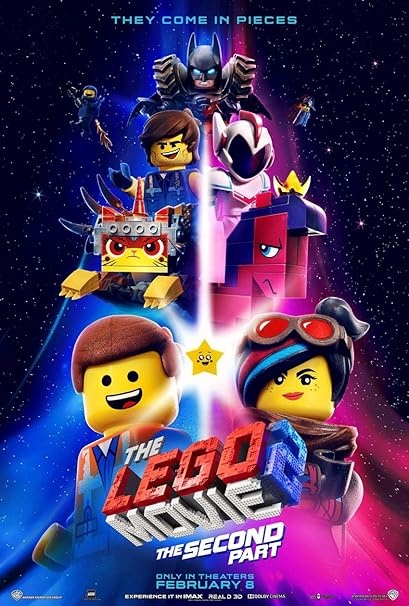
I’m a huge fan of the LEGO movies. (Well, I had no desire to see Ninjago…) Both LEGO and LEGO Batman are among my favorite animated movies of the decade. These movies are imaginative, hilarious, and take what should be a shameless, cash-gab marketing ploy and turn them into delightful films with great themes. While the official sequel to the essentially perfect LEGO Movie doesn’t live up to the standard of the first two films in the series, its heart and charm are still there.
Much of that has to do with the screenplay, once again from Phil Lord and Christopher Miller. The difference between The Second Part and the “first part” is that they didn’t direct this one. And you can definitely tell. But having Lord Miller (as they’re colloquially called) still write the movie keeps it (and the series) from becoming a shell of its former self – something that is, unfortunately, quite common in comedy sequels.
Like The LEGO Movie, there’s a clever twist in the third act, which also ties into a great life lesson for kids. The difference this time around is that the twist copies the first film’s a little too much, and doesn’t try enough to be its own thing. However, there were still elements that made it unique and stand out. For the sake of spoilers, I won’t go into any of them here.
Unlike the first film, this is a musical (which I didn’t see coming). Some of the songs are great (the peppy version of “Everything is Awesome” and “Catchy Song” being two highlights), others were more forgettable. But they took a swing, and I appreciate that.
The performances in this are great, as well. Most of the main cast returns for this one, and they all do a great job. But it’s the newcomers that really shine, particularly Tiffany Haddish. Her well-known charm is on full display here, and she really makes this role her own. This is definitely another highlight of the Haddishsance.
All in all, this was a solid movie. The comedy is kind of hit and miss, but when it hits, it really hits. And while it’s a little derivative of its predecessor, there’s enough heart to make it stand out. And above all, it’s a thoroughly enjoyable film.
6. The Farewell
(Minor spoilers ahead.)
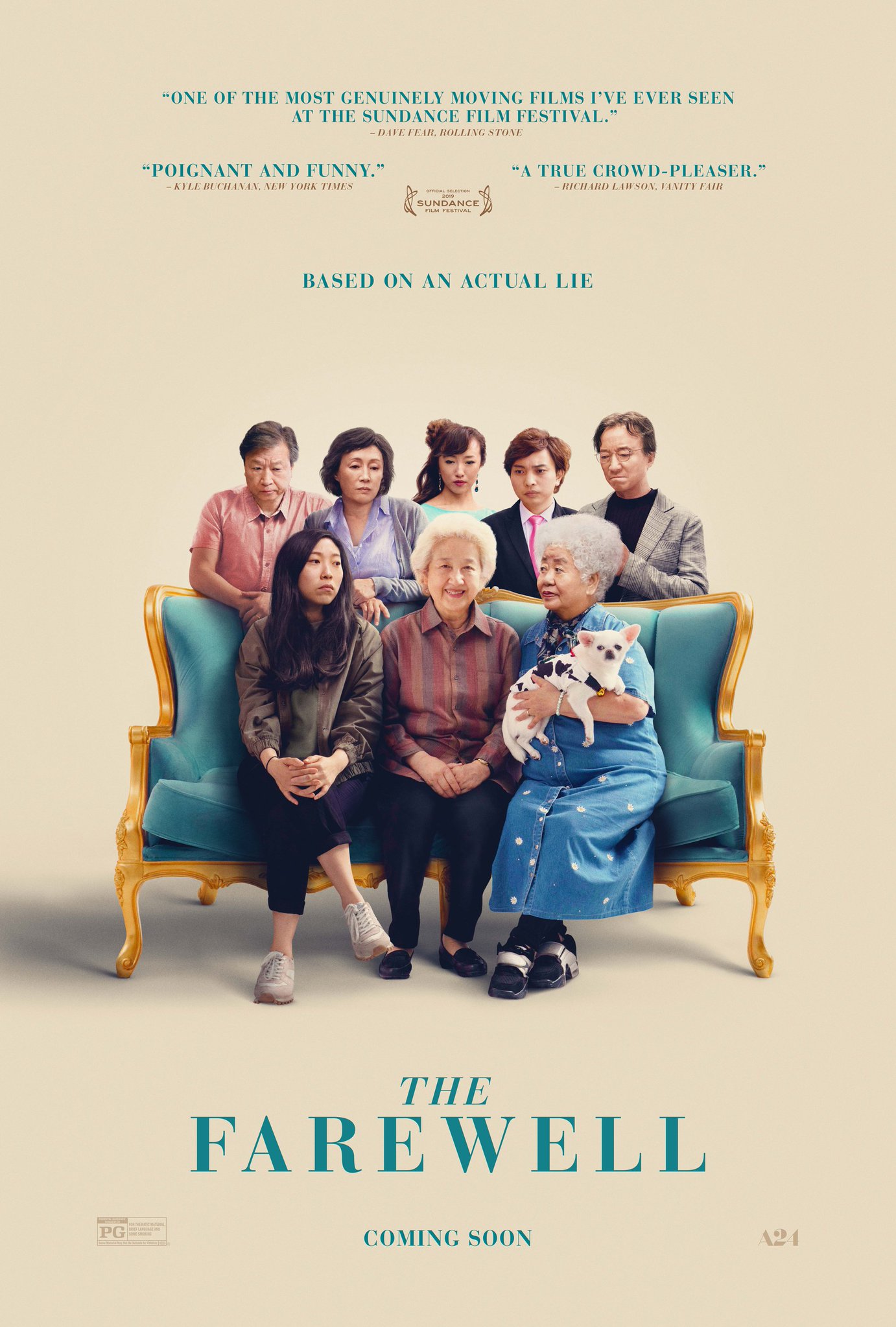
Tonally, my favorite style of movies are the quiet, thoughtful ones. Generally speaking, these kinds of films are often some of the deepest, most relatable and emotional portrayals of life. Enter The Farewell. This is one of the most genuine, personal films I’ve seen in a long time.
It may be my own bias or ignorance, but it seems that movies portraying the importance of family – particularly from the eyes of a tight-knit, relatively functional one- are few and far between. So it was refreshing to see a film that focuses so much on the familial unit, particularly cross-generational relationships.
Thematically, this is maybe one of the deepest films of the decade. Because the whole premise is predicated on a lie – albeit, out of love – the struggle Billi endures throughout the film, coupled with the family’s collective sadness, is extremely powerful. Truth, love, and grief are just some of the themes tackled in this film. And it does it in less than two hours. A pretty impressive feat, if you ask me.
The main dynamic between Nai Nai and Billi is wonderful. Seeing how important her grandmother is to her is beautiful and inspiring. Maybe it’s because I always love seeing a grandparent-grandchild relationship, but I found myself really moved by their relationship and how they approach each other. To see how earnest Billi is toward her grandmother and how much she cares about protecting her was very profound.
Then again, the entire family dynamic is great. The way Billi relates to her extended family is extremely engaging, and to see how Nai Nai interacts with each member provides a lot of drama, as well. Though not every character gets an ample amount of screen time, they each have their own personalities that drive how they all relate to each other and to Nai Nai. Too often, fleshed out main characters dominate screen time, and supporting characters are pushed to the sidelines without giving them much depth. So it was refreshing to see a three-dimensional supporting cast for a change, even with the little screen time they received.
Also, I can’t stress enough how impressed I was with Awkwafina’s performance. This is only the second movie I’ve seen her in (the first being Ocean’s 8), but to see someone generally known for more comedic roles give such an emotional, subdued performance was inspiring. This furthers my belief that comedic actors can be some of the best dramatic actors. (A topic I may touch on at a later date.) I’m so happy she won the Golden Globe for her performance. It was absolutely well deserved.
In a seemingly never-ending sea of loud, giant spectacles, quiet, thoughtful films feel like a vanishing breed. This was a beautiful, thoughtful breath of fresh air, and a great example that a good script doesn’t need explosions, sex, or giant CGI skybeams to leave an impact.
5. Avengers: Endgame
- Directed by Anthony Russo, Joe Russo
- Screenplay by Christopher Markus, Stephen McFeely
Yes, I see the irony in putting this right above The Farewell.
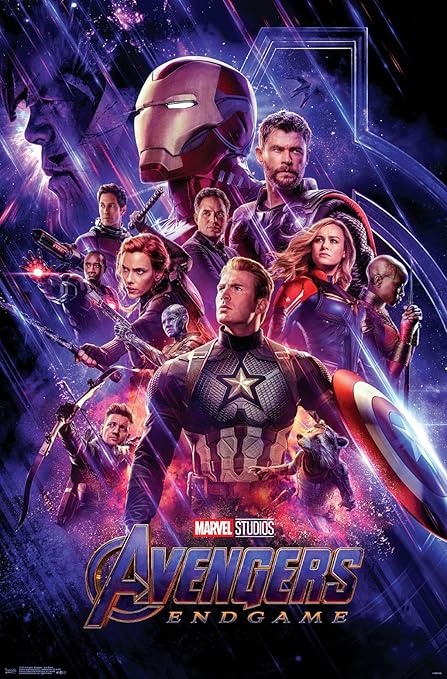
Let me say this from the outset: I’m not a huge fan of Marvel movies. Marvel has settled into a formula that they like and is proven to work, so every one of their films feature virtually the same story beats. But there are a handful of movies that shuck that formula – or at least build on it. Avengers: Endgame is one of those films.
That can be seen from the opening frame. The film doesn’t start with a heist or a chase or a big, loud moment. It starts with Hawkeye enjoying the outdoors with his family at their country home. It’s an extremely quiet beginning to the film, yet is one of its most memorable scenes. Hawkeye was absent in the previous film, so to see how Thanos’ actions affect him is a really powerful moment, and sets the tone for the rest of the film.
The fact that the film forgoes the classic disaster / villain set up for a slower, more character driven opening act is a big reason why this is not only on the list, but so high up. Comic book/superhero movies are at their best when they’re character driven. Great films like The Dark Knight, Spider-Man 2, Captain America: The Winter Soldier, and another film that I’ll talk about shortly are all character-driven as opposed to situationally-driven. That will always result in a deeper, more three-dimensional movie. And will ultimately make it more memorable. And the Russo Brothers understood that when collaborating on these two final Avengers movies.
I will say the last half or so of the film settles into a more familiar (boring) Marvel formula, and some of the emotional stakes don’t feel quite as deep or powerful as earlier in the film. Also, while that final battle was admittedly pretty great, it did feel a little too fan servicey at times. That’s why I personally prefer Infinity War to Endgame.
But this is still a really solid superhero movie. It focuses on the characters’ emotional response to the events of the previous film, which is a welcome change of pace to these types of films, and puts a nice bow on a unique era in cinema history.
4. How to Train Your Dragon: The Hidden World
- Screenplay by Dean DeBlois, Cressida Cowell
- Studio: Dreamworks Animation
Trilogies are a tricky thing. Many times, they’re mandated by a studio in order to cash in on a popular movie. Making each film feel like a natural and necessary progression can be a tall task.
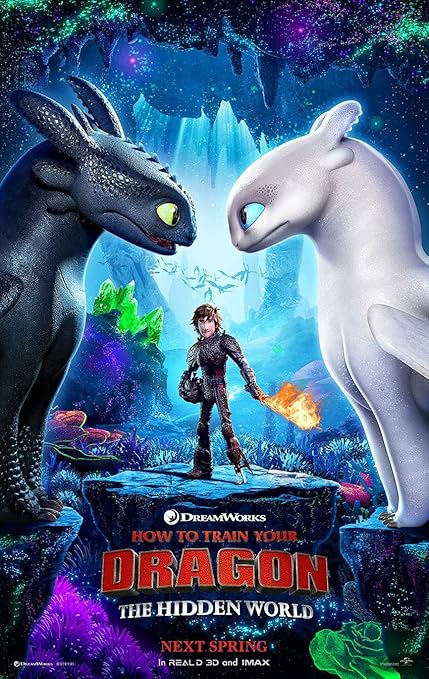
That’s what makes Dreamworks’ excellent How to Train Your Dragon trilogy so impressive. The films not only range from good to great, each one feels like a natural story progression for Hiccup (and, in this case, Toothless).
Dreamworks isn’t really known for good writing or three-dimensional characters. Too many of their movies go for the least common denominator approach, making something loud and colorful that appeals to kids in a way that doesn’t require anyone to think. And when I saw the trailer for The Hidden World, I was concerned that this was the approach Dreamworks mandated from Dean DeBlois and his team. The comedy looked broad, the action looked the same as the previous two films, and the big reveal looked like a retread of the second film. This series, that had always featured both fun action for kids and deep themes for adults, appeared to be going full-on kids movie for its conclusion.
Boy, was I wrong. And ecstatic to be so.
Not only was a well-written story, the conflict and climax were some of the best elements of the trilogy. I don’t really want to go into specifics because I don’t want to give anything away. But trust me, the last third of this film may be the best act of the entire series.
The animation is also fantastic. This series has always had impressive visuals (in part because of their collaboration with Roger Deakins), but the team really topped themselves with this one. All the dragons look great, and their movements when they’re airborne look fantastic. Again, the climax is such a visual treat. And while I won’t spoil the big reveal (though you can see hints of it in the trailer), I will say that it’s easily the best animated sequence of the trilogy.
And of course, the trilogy ended on an absolutely perfect note. I don’t have a personal attachment to this trilogy like I do with the Toy Story franchise. And yet, I found myself getting teary-eyed at the end of this film. This is a textbook case of excellent character resolution, and is a great final chapter of Dreamworks’ best franchise.
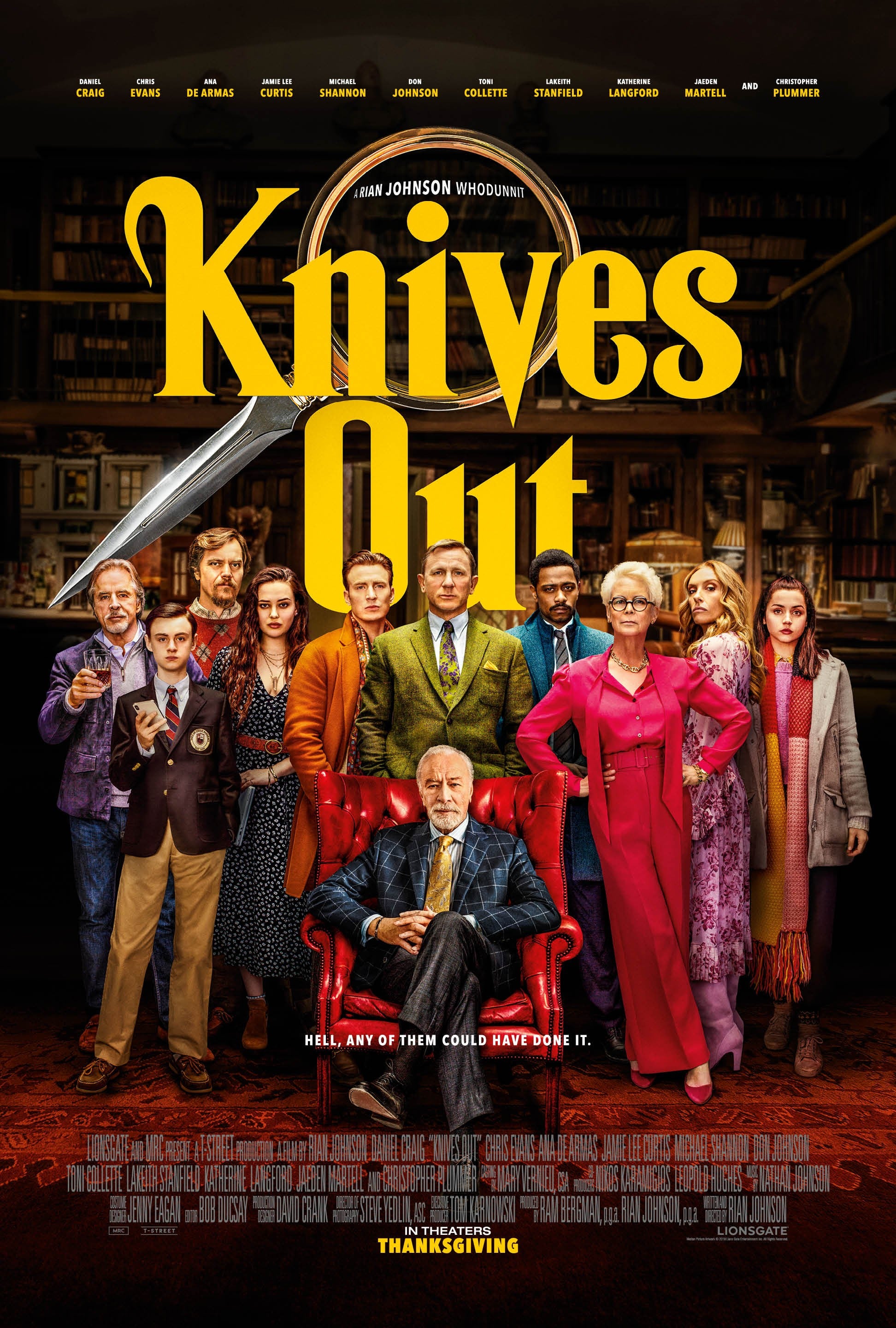
3. Knives Out
- Screenplay by Rian Johnson
This was the most fun I’ve had in a movie theater in a very long time. If you’re going to make a mystery movie that hearkens back to classic mysteries of ole, it’s going to feel like a fun homage, no matter how serious you try to make it. Thankfully, Rian Johnson leaned all the way into that, making a full-on black comedy. So many moments in this film are straight up hilarious. Nearly every character was a marvelous caricature of a classic mystery trope. And many of the performances were intentionally over the top and ridiculous.
Daniel Craig – suave, James Bond himself – had the best Kentucky fried accent. There were moments where I could’ve sworn he was Frank Underwood. (Maybe he should’ve replaced Kevin Spacey on House of Cards? Anything other than that atrocious final season…) Chris Evans was delightfully mischievous. Jamie Lee Curtis, Michael Shannon, and Toni Collette were collectively the worst of humanity, and they were hilarious. And Lakeith Stanfield played a great straight man to Craig.
The music and editing were great, too. Musically, this movie starts with very genteel, upper crust music one would find in the intro to Masterpiece Mystery! But if there’s one thing Rian Johnson isn’t, it’s predictable. So he, of course, throws in some classic rock, just to throw you off. The music choices work well with the pacing and editing. This is a very snappy movie, so having upbeat music helps keep that peppy nature of the cut. Speaking of the editing, the way this film is cut enhances the comedy. I always love when the director joins in the comedy. The way Johnson uses smash cuts is fantastic, and matches the tone of the film perfectly.
But the crowning achievement of this film is its brilliant screenplay. Rian Johnson loves playing genre conventions, and this film is no exception. This has all the trappings of a fun, classic whodunnit mystery. They even wink to the camera at one point: “They all live in a giant Clue board.” Normally, I hate that kind of humor. But it just works here.
But this isn’t your typical mystery movie. And Johnson makes that very apparent after the first act. The complete shift in expectations and genre conventions made me focus even harder on the film. I spent the whole time trying to figure out what he was going to do next to justify his story choices, which made it even more mind-blowing when he fooled me.
A friend of mine gave a very short, but perfect review of this film: “How do you make a murder mystery that fools people expecting to be fooled? You make this movie.”
Couldn’t’ve said it better myself, Jake.
I was expecting a good movie. I wasn’t expecting a friggin’ great one. Bravo, Rian Johnson. Dab on the haters. (Actually, don’t do that. I immediately regret everything…)
2. Joker
- Directed by Todd Phillips
- Screenplay by Todd Phillips, Scott Silver
(Minor spoilers ahead.)
This was the hardest of the ten to write about. There’s so much to say about this movie that it’s been hard to organize my thoughts succinctly.
This might be the deepest, most thought provoking comic book film I’ve ever seen. Todd Phillips could’ve gone in a plethora of directions with this film and it probably still would’ve been a success. Instead, he made the bold choice to try something completely different from the source material.
And he friggin’ knocked it out of the park.
What makes this film a game changer is the mental illness angle. By showing Joker as a disturbed individual struggling with mental illness, one can better understand him. Now, that doesn’t mean he’s portrayed as the hero (a point I’ll come back to in a moment). It’s similar to a law enforcement agency bringing in a psychiatrist to help with their investigation. If they can get in the mind of a criminal and understand what makes them tick, they can more quickly apprehend them.
This is what Phillips does. He helps us understand Joker’s troubled nature a little bit more, while understanding the reprehensibleness of his actions. (Yes, that’s a word.)
Let me be clear: Phoenix’s Joker is not a sympathetic villain. I try not to speak in superlatives and absolutes when it comes to opinions, but thinking otherwise is the wrong take.
There’s an extremely important difference between a sympathetic villain and an empathetic one. A sympathetic villain is someone we pity and want to see succeed; an empathetic villain is someone we understand, though may not agree with. That’s a crucial distinction to make with this movie, because Phillips brilliantly portrays the Joker as an empathetic villain, not a sympathetic one, as some want you to believe.
By portraying Joker in an empathetic way, Phillips masterfully portrays a man tormented by mental illness and his descent into darkness, while never portraying his actions as heroic.
Some other elements I liked: The score is haunting in all the best ways. To me, that’s the best indicator that Phillips was not telling a heroic story. The score is extremely dissonant. It makes you feel (rightfully) uncomfortable. It’s the exact opposite of John Williams’ triumphant Superman score. You don’t give a hero a score like the one Golden Globe winner Hildur Guðnadóttir composed.
The production design and cinematography are superb. Phillips fantastically captures the beginning of Gotham’s descent into madness. As we all know, when Batman came on the scene, the city was overrun by crime and essentially run by criminals. Many portrayals of early Gotham call it the most violent city in America. It had to get that way somehow. Highlighting the garbage strike, which leaves bags of trash literally littered through the street, perfectly marries Joker’s ascent to folk hero in a time of civil unrest. Gotham was a powder keg ready to explode, and the cinematography and production design captured that perfectly.
And, of course, Golden Globe winner Joaquin Phoenix. Need I say more?
This was a daring film. So many things could’ve gone wrong. It was mired in unsubstantiated controversy, and thinkpieced to death. And it overcame all of that. Artistically speaking, nearly every note it hits is done perfectly. A truly haunting and unforgettable cinematic experience. Here’s hoping more comic book movies choose to be just as creative, original, and daring.
1. Toy Story 4
- Screenplay by Andrew Stanton, Stephany Folsom
- Story by Rashida Jones, John Lasseter, Andrew Stanton, Josh Cooley, Valerie LaPointe, Will McCormack, Martin Hynes, Stephany Folsom
(Toy Story 2 spoilers & some Toy Story 4 spoilers ahead.)
Easily the biggest surprise of the year. I went into this movie skeptical as all get out. How could they top the perfect ending of 3? Why was Pixar, renown for their creative purism, making an unnecessary cash grab? Did Disney finally brainwash them?
Then I saw the film.
To say I was blown away would be the understatement of the year. This might piss off a lot of people, but I actually like this one more than Toy Story 3. I’ve never loved the third movie like so many people have. The third act? Absolutely. Quite possibly the best act Pixar has ever written, in my view. (It’s right up there with Up’s opening act.) But the rest of the film never grabbed me like the first two movies.
What struck me most was how this film actually felt necessary. Many will probably disagree with me, but as the film progressed, it became clear that every character had a satisfying conclusion to their respective arcs in the previous film… except Woody.
One reviewer I follow mentioned how Woody-heavy this movie is. He felt as though the rest of the ensemble doesn’t get adequate screen time. While I understand his line of thinking, and agree to an extent, I come at it from a different angle.
This is Woody’s story. As mentioned, the rest of the gang got their closure in the third film. Woody, however, never got that proper closure. It appeared that way, but when you think about it, that ending didn’t ring true to his character. It’s well documented that he needs an owner to protect. He fiercely protected Andy, temporary lapse in judgment notwithstanding.
What’s he’s not used to is his owner pushing him aside, which is what he struggled with most in 3. And while it looked like Bonnie would give him what Andy no longer could at the end of 3, the writers made the brilliant choice to have her attention be drawn to her familiar (and newer) toys. She doesn’t have the attachment to Woody that Andy did, so an old outdated cowboy doll would only keep her attention for so long. I think any parent could relate to that.
With Woody relegated to the sideline, he has no reason for being. That opens up an existential can of worms that Pixar felt obligated to take on headfirst.
So Toy Story 4 was a needed film to give Woody the proper closure he deserves. And in the end, he gets it. With his arc finally at a close, we can now say that everyone got their happy ending.
And dang it, I didn’t think the end of 3 could be matched, but the ending of 4 did. Curse you and your wonderfully emotional films, Pixar!
I would be remiss if I didn’t mention how stunning the animation is. Since 1995, every Pixar film has upped the ante, and Toy Story 4 feels like the studio’s crowning achievement, visually. From the colors, to the textures, to the lighting, to how they use focus, everything is meticulously and painstakingly detailed down to the pixel. There are no shortcuts. Because that’s not how Pixar operates. (That’s Dreamworks’ and Illumination’s M.O.) Pixar truly lives up to their belief that “art challenges technology, and technology inspires the art.”
So those are my ten favorite movies of the year. While I personally didn’t feel like it was a very strong year overall, it still featured some great films. I was pleasantly surprised by the crop of quality big-budget features. It was still dwarfed by garbage cash grabs, but it felt like a positive, if not tiny, step forward.
I also felt like this was a strong year for animation. Three animated films were in my favorite ten, with Netflix’s I Lost My Body narrowly missing the cut. I always get excited for quality animation, and this year didn’t disappoint.
And with films like A Hidden Life and 1917 already getting rave reviews, I’m already excited to see what 2020 brings!
You can find every film I saw this year, and where I ranked them, on Letterboxd.




 Matt Peterson